
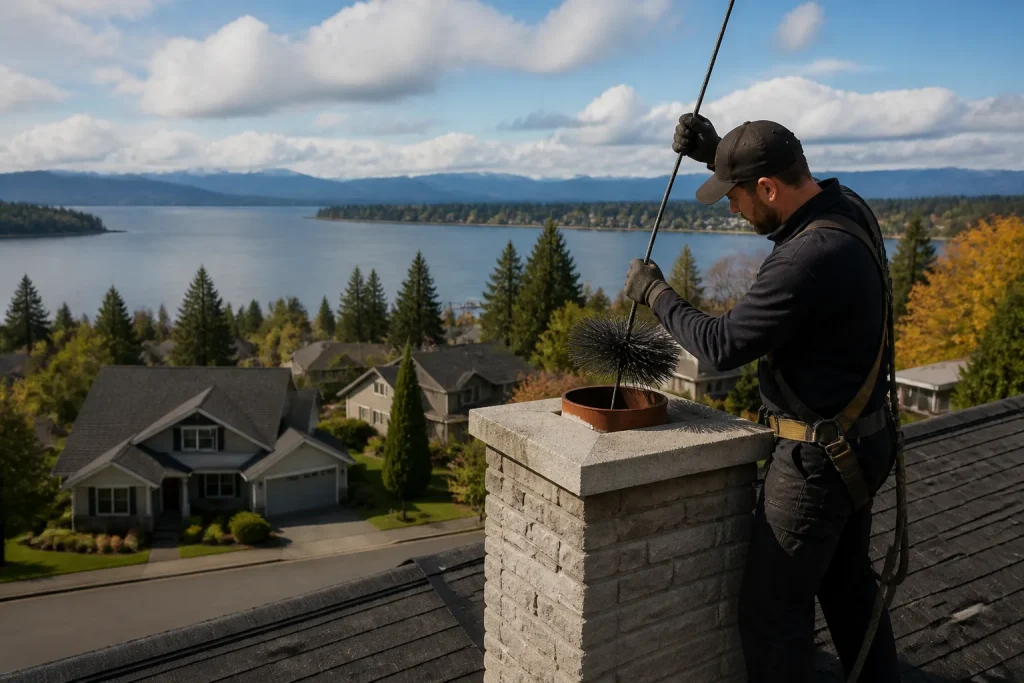

DuraFlex Chimney Sweep in Marysville: A Homeowner’s Guide
Most homeowners shopping for a liner hear one word repeated: flexible. That’s not the part that matters. DuraFlex is a corrugated 316Ti stainless system built to survive the acidic condensate that eats through a standard 304 liner in just a few heating seasons, and in a wet climate like ours, that difference is the whole ballgame. Here’s what the product actually does, when you need it, and how to tell an honest reline quote from a padded one. If you’d rather hand it to a specialist, call (877) 792-7047.
What Is DuraFlex and Why Is It Different?
DuraFlex is a flexible stainless steel chimney liner system. The alloy is the story: 316Ti, a titanium-stabilized grade of 316 stainless, versus the 304 stainless used in most budget liners. On a wood-burning flue running hot and dry, 304 performs fine. On a flue handling a modern gas insert, a high-efficiency appliance, or any setup with cooler exhaust, moisture condenses on the liner wall and mixes with combustion byproducts to form an acidic film. 304 doesn’t resist that film well. 316Ti does.
Marysville sits in a climate where this matters more than the product brochure admits. Wet winters, tight modern houses, and gas inserts that run on low and slow all produce damp flue conditions. A liner that only accounts for heat and ignores chemistry is a liner you’ll replace early.
We specify DuraFlex for exactly that reason: it’s a specification-grade system engineered for the flue conditions we actually see around Marysville, not just the ones that look good on paper. The corrugation flexibility is a bonus that solves real geometry problems, which we’ll get to.
Which Marysville Flue Configurations Need a Flexible Liner?
Rigid stainless liner is the simplest, cheapest, most durable option when the flue is straight, wide, and vertical. Plenty of Marysville homes meet that description. Many don’t. DuraFlex handles the configurations that make rigid liner impossible or impractical:
- Offset flues. Older homes frequently have a jog in the masonry where the flue shifts around a structural element. Rigid liner can’t make the turn; flexible DuraFlex can.
- Narrow or ovalized flues. A flue built for an old open fireplace is often too small in cross-section for a modern appliance’s exhaust volume. Flexible liner sizes to the appliance, not the masonry.
- Multi-story chimney runs. Long vertical drops through a two-story chimney need a liner that can be lowered without joints. A single continuous flexible length eliminates the seams that leak.
- Masonry with irregular interior surfaces. Spalling, mortar protrusions, and old parging all make rigid liner insertion a fight. Flexible liner conforms rather than forcing.
If you’re unsure which category your chimney falls into, that’s what an inspection is for. A chimney sweep with a camera answers the question before anyone quotes a liner.
How a DuraFlex Sweep Differs From a Standard Sweep
The word “sweep” covers two different jobs depending on the setup. A standard sweep cleans the flue and inspects. A DuraFlex sweep starts with a different question: what size liner does this appliance actually need?
The answer comes from the appliance’s BTU output and exhaust volume, not the existing flue opening. A liner that’s too small chokes the appliance and accelerates creosote. A liner that’s too large cools the exhaust too fast, which encourages condensate. Sizing to the appliance is the whole job, and it’s where the cheap quote usually goes wrong.
In practice a DuraFlex assessment on a Marysville home looks like this:
- Camera inspection of the full flue to map offsets, transitions, and damage.
- Measure the existing flue interior and record any narrowing.
- Match the liner diameter to the appliance’s BTU rating and venting requirements.
- Sweep the flue before any liner is installed, never after.
- Confirm the appliance connector and termination will work with the new liner.
That last point is easy to skip and expensive to fix. More on it below.
What a Completed DuraFlex Installation Includes
A liner is not the finished product. It’s one component of a system, and leaving any of the other pieces out shortens the liner’s life or fails inspection. A full DuraFlex installation includes:
- The flexible liner itself. Sized to the appliance, run in a single continuous length with no seams inside the flue.
- Insulation wrap. A layer around the liner that keeps exhaust hot, which reduces condensation and improves draft. On an exterior-mounted masonry chimney it’s close to mandatory in our climate.
- Top plate and cap. The top plate seals the flue at the crown so water and animals can’t get in. The cap protects the liner’s termination. If a crown is cracked, we repair or replace it while the chimney is already open; a chimney repair that gets deferred only becomes a leak.
- Appliance connector. The short piece linking the stove or insert to the base of the liner. It’s where most installation failures show up, and where a proper kit uses a rated connector rather than a cut-down piece of stovepipe.
- Bottom support or block-off plate. Seals the old fireplace opening so combustion gases go up the liner, not around it.
We source components from Olympia Chimney and Copperfield so the odd sizes, custom connectors, and uncommon caps are in the job rather than on a back-order list. Found during inspection, repaired the same visit is the goal, not a sales line.
What happens when you call
- 1
A real person answersNo phone trees – you reach a local pro.
- 2
You get an upfront price rangeHonest numbers before anyone is dispatched.
- 3
A background-checked tech heads outLicensed & insured, dispatched right away.
- 4
You approve before work beginsNothing starts until you say go.
How Long Does a DuraFlex Liner Last, and What Does the Warranty Cover?
A well-installed DuraFlex liner in a properly sized flue can reasonably serve many years of regular use. The realistic range depends on the appliance (gas and high-efficiency wood are harder on liners than a traditional open fireplace), how hot the appliance runs, and whether the chimney is insulated. A liner run cold and wet in an uninsulated exterior chimney in Snohomish County humidity ages far faster than the same liner inside a warm interior chase.
Now the part every homeowner should read twice. Manufacturer warranties typically cover defects in the liner material itself, not installation failures. Those are two separate things:
- Material warranty: covers the liner against a manufacturing flaw. Usually requires proof of proper installation to honor.
- Workmanship coverage: covers the installation, which is what the installing company stands behind, and only for as long as they stand behind it.
Ask any contractor you’re considering how their workmanship is handled if a problem shows up. The answer tells you almost everything.
When to Call a Pro
Some chimney work is genuinely a homeowner task. Sweeping the firebox, checking for creosote buildup on the flue walls, and confirming the cap is intact are all fair game. Liner installation isn’t.
Here’s why: a flexible stainless liner has to be handled carefully to avoid kinking or scratching during the drop, and the sizing decision is unforgiving. An undersized liner fails code and chokes your appliance. An oversized one accelerates condensate. And the top plate, insulation, and connector all have to be fitted correctly or the liner’s rated life is just a number on a warranty card. The safety stakes are real too. A misconnected appliance is a carbon monoxide risk. If you smell gas, see a damaged flue, or find the flue cracked, treat it as a professional job.
If you’d rather not DIY the assessment, call (877) 792-7047. Our technicians have up to 10 years of experience and use the same process from camera inspection through finished install.
Related services in Marysville: a fireplace repair or a Chimney Sweep Marysville inspection may be the right starting point if a liner isn’t actually needed. That’s worth knowing before you spend a dollar on one.
The Bottom Line
DuraFlex isn’t the right answer for every flue, and a specialist who tells you so is worth listening to. It is the right answer when the flue is offset or narrow, when a modern appliance is producing acidic condensate, or when you want a liner sized to the appliance rather than the masonry. The 316Ti alloy is what makes it hold up in a wet climate. Insulation, top plate, and a rated connector are what make the install last. A written estimate sets the final price, and we’ll tell you when the work can wait. We also use HeatShield ceramic resurfacing when a damaged liner can be restored without a full reline, which saves the cost of replacing something that still has serviceable life.
If you’re in Marysville and need help, Chimney Sweep Marysville offers free estimates. Call (877) 792-7047. We answer 24/7. Fast dispatch from 7am to 7pm, Sunday through Friday, closed Saturday.
Frequently Asked Questions
An inspection with a camera is the only reliable answer. A sweep cleans the flue; a reline is needed when the flue is damaged, unlined, undersized for a modern appliance, or continuously failing to draft. If the flue is clean and sound, you don’t need a liner, and we’ll tell you so. Call (877) 792-7047 for an exact quote. Estimates are free.
Yes. That’s one of the specific configurations the flexible design is built for. A straight masonry flue with no offset may not need flexible liner at all, and a rigid stainless liner is often a better answer in that case. The camera inspection answers which you have. Call (877) 792-7047 for an exact quote. Estimates are free.
On a dry hot wood flue, 304 performs well. On a cooler flue with gas or high-efficiency appliance exhaust, 316Ti resists the acidic condensate that shortens 304’s life significantly. In Marysville’s wet climate with a modern insert, the difference is usually worth the price difference. Call (877) 792-7047 for an exact quote. Estimates are free.
Usually not. Manufacturer warranties cover the liner material. Workmanship coverage comes from the installer and only for as long as they’re accountable. Ask before the job starts. Call (877) 792-7047 for an exact quote. Estimates are free.
Written by the team at Chimney Sweep Marysville.
Need Chimney Cleaning Help?
Call Chimney Sweep Marysville - the local pro we connect you with is licensed and insured, here with fast help in Marysville.
(877) 792-7047