
Last updated November 25, 2026
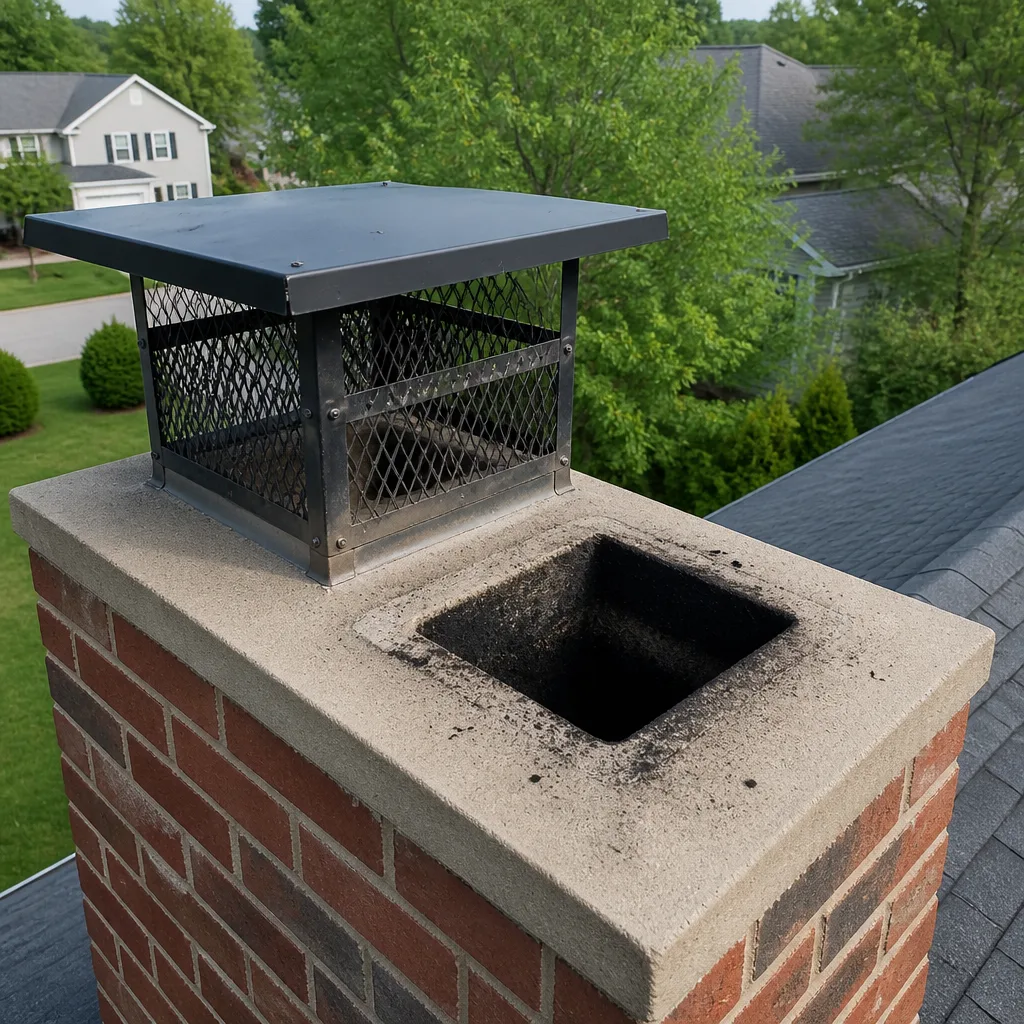 Sweep & inspection
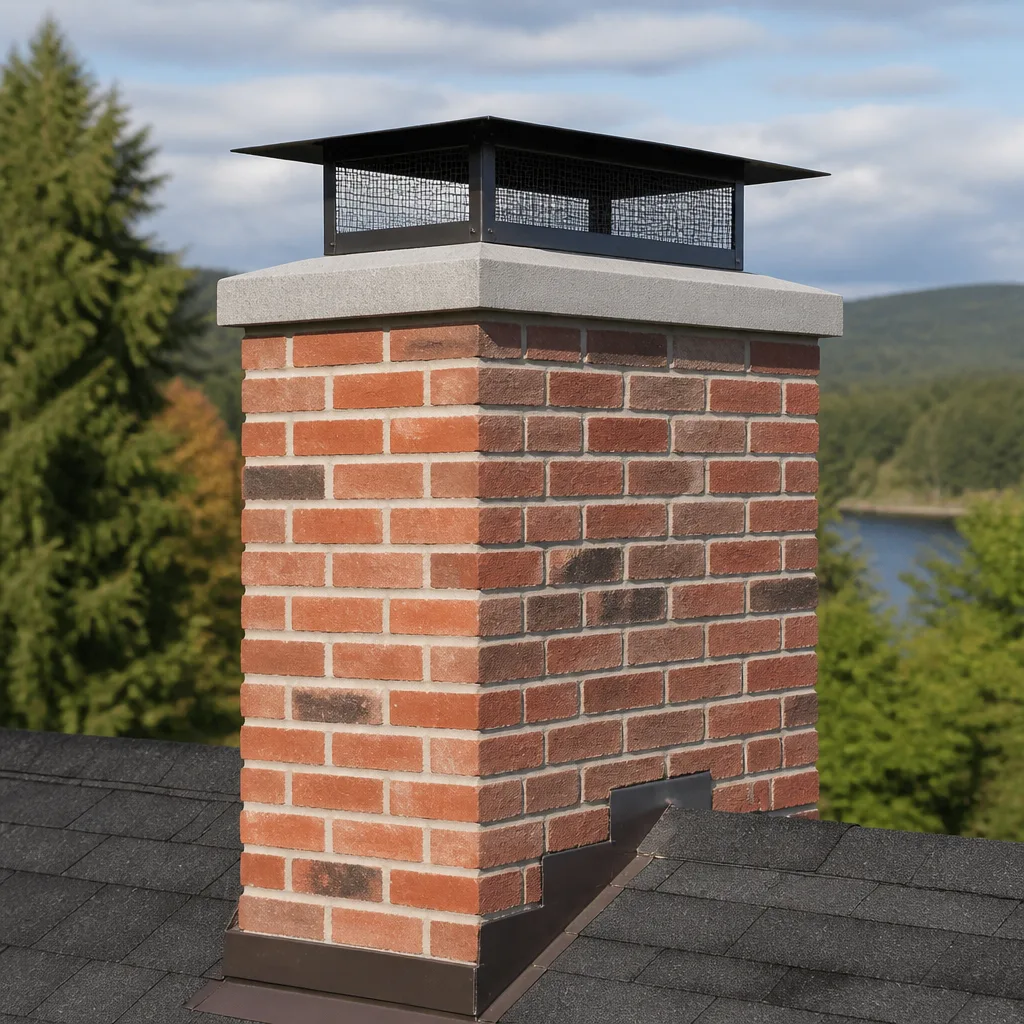 Caps & crowns
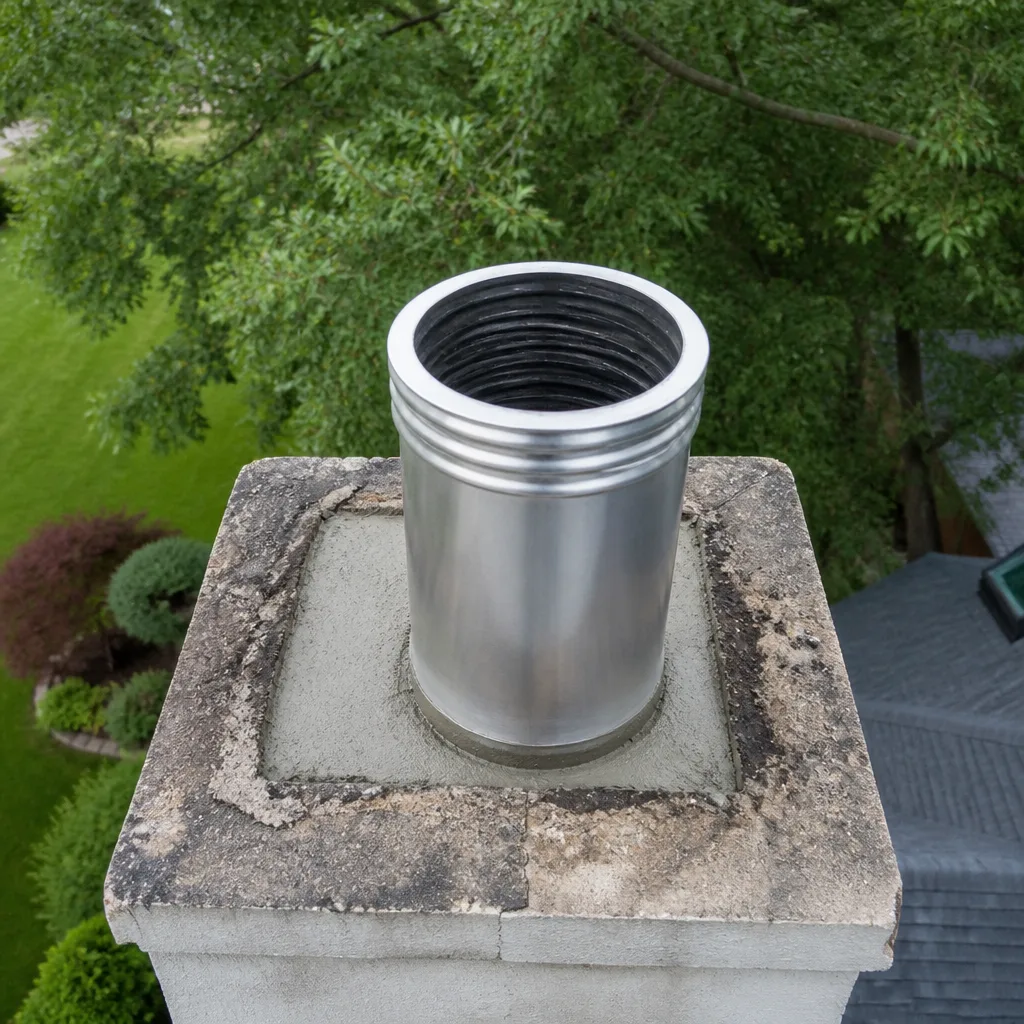 Flue relining
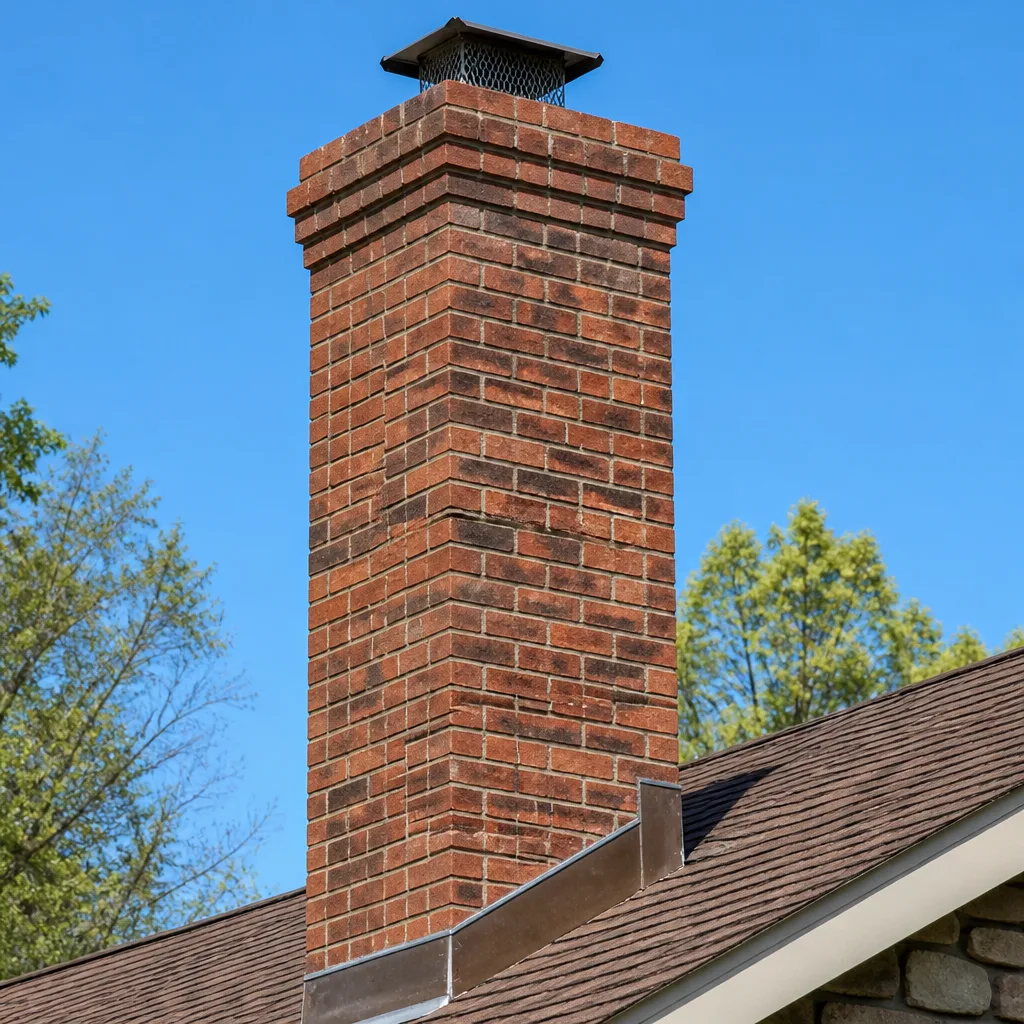 Masonry repair
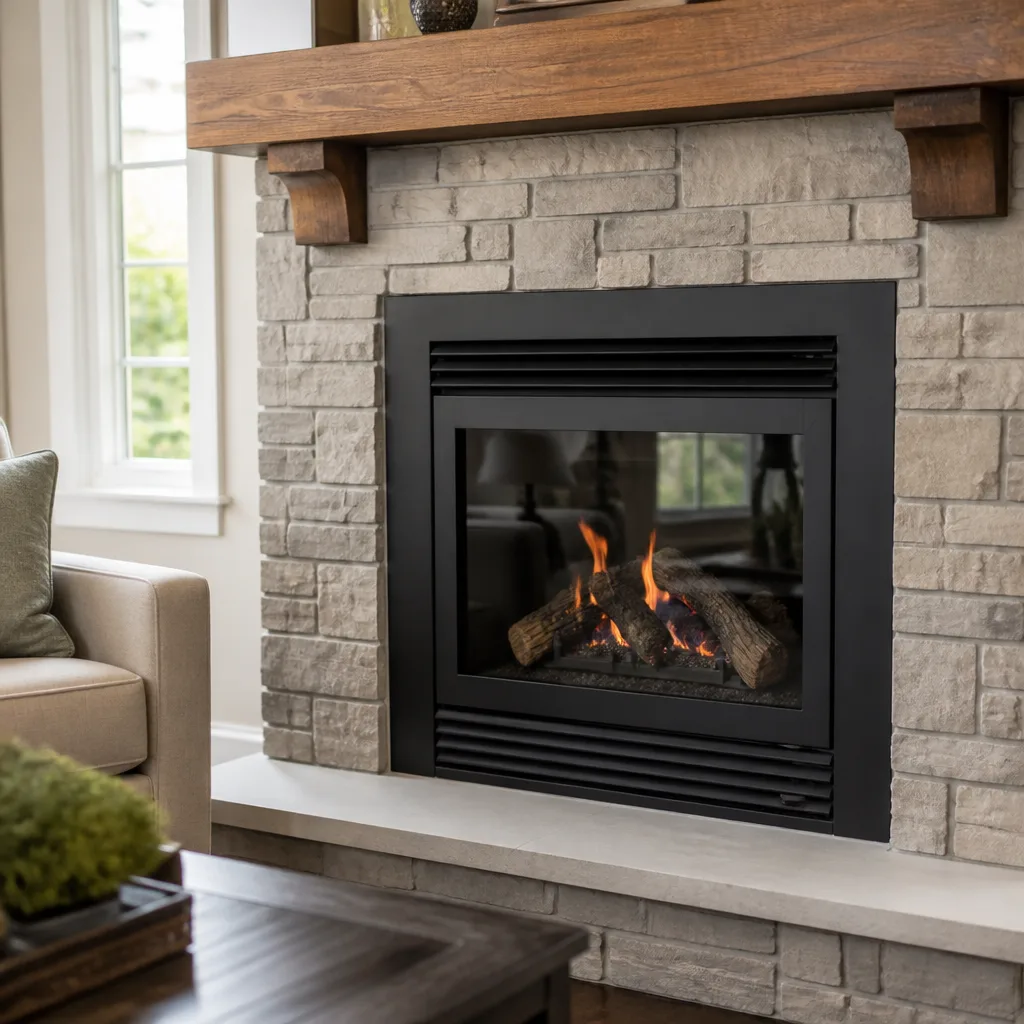 Gas fireplace service
Level 1 sweep and inspection to the NFPA 211 annual standard - flue, crown, cap, and flashing checked and photographed
Chimney sweep logs do not sweep chimneys. They loosen some creosote - which then falls where a brush and vacuum still have to collect it.
DIY vs Professional Chimney Cleaning: The Marysville Homeowner’s Decision Guide
Most homeowners who decide to sweep their own chimney are not being reckless. They’re being economical and careful. They buy a brush kit, watch a few videos, and go at it. The brush pass is the easy part, and here is the thing that surprises people: it’s also the part that matters least. What actually protects your home – spotting a hairline crack in the flue liner, reading the difference between Stage 1 and Stage 2 creosote, noticing a crown that’s starting to separate – requires equipment most homeowners don’t own and pattern recognition that video tutorials don’t transfer. This guide is written for Marysville homeowners who burn regularly and take chimney maintenance seriously. We’ll draw the line clearly: what you can safely do yourself, what you can’t, and how to tell the difference before you buy a brush.
Quick Answer
A homeowner with a quality brush kit can remove light, powdery creosote from a straight flue run. Everything beyond that – glazed Stage 2 deposits, hidden liner cracks, cap and crown condition, offset flue geometry – needs a trained technician with rotary cleaning equipment and a camera system. In Marysville, where damp winters and frequent wet-wood burning accelerate creosote accumulation, the practical answer for most households is an annual professional sweep paired with routine DIY ash removal and ground-level visual checks.
Styles & brands we work with
- Sweep & inspection
- Caps & crowns
- Flue relining
- Masonry repair
- Gas fireplace service
Table of Contents
- What actually differs between a DIY sweep and a professional one
- What you can legitimately do yourself
- Why hardware-store brush kits fall short in Marysville
- The equipment that changes the outcome
- Reading creosote stages: the judgment call DIY can’t make
- The inspection record and your insurance
- The one good DIY use case: a mid-season visual check
- Cost comparison: DIY vs professional in Marysville
What actually differs between a DIY sweep and a professional one?
The difference is not the brushing motion. It’s what surrounds it: containment, inspection, and interpretation. A DIY sweep is essentially one task performed blind. A professional sweep is a diagnostic visit during which cleaning is one step.
When we perform a chimney sweep in Marysville, the visit follows a set sequence:
- Setup and containment. Floor protection and a HEPA-rated vacuum run throughout so no soot enters the living space.
- Camera inspection first. A camera run before cleaning reveals the flue’s geometry, existing damage, and the actual creosote stage.
- Cleaning, then re-inspection. The flue is swept with the appropriate tooling – poly brushes for light deposits, rotary heads for glazed creosote – then re-checked to confirm the deposits are actually gone.
- System check. Cap, crown, firebox, damper, and any appliance connection are evaluated as one interconnected system, not separate tickets.
- Documentation. Findings get explained, with photos, and a written record of the inspection is left with the homeowner.
That last step matters more than most people realize. We’ll come back to it. But note the order: inspection comes first. A homeowner brushing a flue without looking at it first is cleaning an unknown – knocking soot around a liner they’ve never actually seen. If there’s a crack behind that soot, or a separation at a flue joint, the brush doesn’t know and neither does the person holding it.
In Marysville especially, the flue tells a story that’s invisible until you run a camera. Homes along the Tulalip reservation edge and in the neighborhoods off State Avenue that heat primarily with wood tend to accumulate creosote faster than homes that burn occasionally for ambiance. The camera is the only way to know which kind of household you actually are.
What can you legitimately do yourself?
Two tasks belong on the homeowner’s side of the line, and we’ll defend both. Doing them well actually makes the professional visit more effective.
1. Firebox ash removal
Ash buildup reduces draft and creates a mess on the sweep day. Emptying the firebox between burns – once it’s fully cooled, into a metal container with a lid – is straightforward and safe. Leave a thin layer (around an inch) of ash on the firebox floor if you burn regularly; it insulates the coals. This is not a safety task, it’s a maintenance habit, but it’s one we’re happy to see homeowners own.
2. Ground-level exterior visual inspection
Stand back from the house and look up at the chimney. From the ground you can legitimately spot:
- A missing or rusted chimney cap
- A crown with visible cracks or pieces missing
- Heavy staining on the exterior brick or siding near the chimney
- Any obvious leaning or separation from the roofline
These are the observations worth noting and mentioning when you call. What you cannot do from the ground is assess the interior flue, which is where the actual fire risk lives. A chimney that looks perfectly fine from the driveway can have a cracked liner, a displaced flue tile, or Stage 2 glazed creosote that’s one ignition event from a chimney fire. The exterior is the headline; the interior is the story.
Why do hardware-store brush kits fall short in Marysville?
Brush kits sold at hardware stores are not bad products. They’re designed for a specific job: single-pass maintenance on a flue that’s already been kept clean. They assume the deposits are light, powdery, and straight. In Marysville, those assumptions often break.
The climate here is the reason. Western Washington’s damp, cool shoulder seasons mean wood often doesn’t reach full seasoning. Firewood that feels dry to the touch in October can still carry 25-30% moisture content when it’s burned in December. Wet wood creates more creosote, and the deposits it creates are different in character – denser, stickier, more prone to progressing from Stage 1 to Stage 2 than the deposits from genuinely seasoned hardwood.
What this means in practice: a homeowner who burned a season of marginal wood, or skipped the previous year’s sweep, is often facing a flue that a hardware-store brush cannot meaningfully clean. The brush will pass through. It will knock down some of the loose material. But it will skate over glazed deposits, and it will not have the mechanical action needed to break them up. The homeowner then believes the flue is clean, which is worse in some ways than knowing it isn’t.
There’s a second problem: brush sizing. Retail kits come in standard diameters for standard flues. Marysville has its share of older homes – pre-war farmhouses, mid-century ranches, and newer builds where the original flue has been relined to serve a wood insert or gas appliance – and each of these has a flue diameter that needs matching. A brush that’s too small leaves deposits on the walls. A brush that’s too large can damage the liner.
What equipment does a professional bring that changes the outcome?
Three pieces of equipment separate a professional sweep from a DIY one in terms of actual outcome, not just convenience.
Camera inspection systems
A camera system such as the Wohler VIS 400 lets us see the interior of the flue the way a doctor sees inside a patient. We typically run it before cleaning to establish what we’re working with, and again afterward to verify the cleaning and reassess the liner. That second pass is where honest advice gets made – and, importantly, where we can show the homeowner what we’re seeing. In our experience, one of the biggest frustrations homeowners bring to us is being told they need expensive liner work with no way to verify it. A camera shows you the crack. You can look at the screen and see it for yourself. Nothing we recommend comes without camera evidence you can see.
Rotary cleaning heads
Poly brushes handle light creosote. For Stage 2 glazed deposits – the shiny, hardened, tar-like material that’s been through a fire stage – we use rotary power systems. Units like the Rutland or Wohler rotary heads cost well over $800 and are not retail items. They’re also not easy to use without training: a rotary head on an unskilled hand can dislodge liner segments, abrade a liner’s surface, or catch in an offset. The risk isn’t hypothetical; it’s the reason we recommend homeowners not attempt Stage 2 removal with rental equipment.
HEPA-rated vacuum containment
A sweep moves a lot of fine particulate. Commercial HEPA containment keeps it out of your house. A shop vac with a bag will not. This is one reason even a technically competent homeowner often regrets a DIY sweep: the cleaning works but the living room pays for it.
Reading creosote stages: the judgment call DIY can’t make
Creosote accumulates in three recognized stages. Knowing which stage you’re looking at determines whether cleaning is routine, urgent, or requires treatment beyond a sweep. Distinguishing them by feel or appearance from inside the flue – without a camera and without the training to interpret what a camera shows – is not realistic for a homeowner.
- Stage 1: Sooty, powdery, flaky. The easiest to remove; the sign of a well-kept flue burning reasonably dry wood. A hardware-store brush can handle this in a straight run.
- Stage 2: Glazed and crusted. Creosote that has gone through a partial combustion event and hardened into a shiny, tar-like layer. This is the stage that initiates most chimney fires. Removing it requires rotary cleaning, chemical treatment, or in some cases both – a brush will not do it.
- Stage 3: Hardened, glazed, and heavy. Often layered with Stage 2 deposits. The material is dense enough that it can restrict the flue’s effective diameter and, in the worst cases, compromise the liner itself. This is beyond cleaning and moves into repair territory.
The reason we stress this: the stage is a judgment call, and the stage determines everything downstream. A professional visit identifies the stage, chooses the tooling, and then reassesses afterward. A homeowner who brushes a Stage 2 flue and sees the deposits reduce by half might assume the job is done – when in fact the remaining glazed layer is the fire risk. This is the biggest single reason we don’t recommend DIY sweeping after a skipped year: the deposits you can’t see are the ones you should worry about.
Where the flue is damaged rather than just dirty, our chimney repair work comes in. Some liners can be restored with HeatShield ceramic resurfacing rather than fully replaced, and we spec DuraFlex flexible liner systems for relining older or offset flue configurations. But none of that can be decided without seeing the liner first, and a brush pass doesn’t show you the liner.
The inspection record and your insurance: what’s at stake?
If a chimney fire occurs after a homeowner has performed their own sweep, what does an insurance adjuster look for? They look for a professional inspection record. Not a receipt for a brush kit; a record of an inspection performed by a qualified technician.
We’re not going to oversell this by telling you self-sweeping voids coverage. It doesn’t, automatically. But the practical reality is that chimney fires are investigated for cause, and a documented professional sweep with inspection findings weighs considerably differently in the claims process than a homeowner’s word that they cleaned it themselves. Your policy language matters here – ask your insurer directly – but in our experience, the homeowners who keep a paper trail of annual professional inspections have a much simpler claims conversation than those who don’t. If you’ve had significant work done, keeping the inspection photos and reports with your home records is the simplest form of protection available.
There’s a second version of this gap that comes up on fireplace repair calls: a homeowner’s DIY sweep is followed, later, by the discovery of a liner crack they couldn’t have seen. The record of “the chimney was swept” exists, but the record of “the liner was inspected” doesn’t. Those are different things, and we’d rather you have the second one. Call us first if you’re unsure what’s already been checked – we’d rather clarify your history than duplicate work.
The one good DIY use case: a mid-season visual check
There is a scenario in which a homeowner doing their own check is genuinely the right call. Here’s how it works, and how to do it safely.
The scenario: you burn only seasoned hardwood in a fireplace insert or freestanding stove that’s connected to a stainless steel liner, you have a clean sweep report from the previous year, and mid-season you want to confirm the flue is behaving normally. This is a visual check, not a sweep. You are not removing creosote; you are confirming that nothing has changed since the professional visit.
- Wait 24 hours after your last fire. The firebox and flue must be fully cool. “It’s been a few hours” is not enough.
- Open the damper and shine a strong light up the flue. You are looking for light reflection – the glazed shine of Stage 2 creosote – and for any visible buildup at the flue joints.
- Look at the firebox walls and baffle. Any new cracks, warped parts, or pieces of liner material on the firebox floor are reasons to call us.
- Stand back from the house and look at the cap and crown from the ground. Confirm nothing’s changed from the exterior view you took at the start of the season.
- Write down what you see. A short note with the date – “checked flue, no visible glazing, cap intact” – closes the loop.
What you should not do, in any version of this check: reach into the flue, close your hand on creosote to “feel how thick it is,” attempt to brush down from the flue top, or apply any chemical creosote remover without knowing the stage of the deposits. And if you see an actual problem, stop looking and schedule a proper inspection. The whole point of the mid-season check is to catch the need for a professional visit early, not to substitute for it.
How do the costs and effort compare?
Honest cost comparison matters here. The DIY case only works if you factor in all of it, not just the price of the brush.
- Hardware-store brush kit: Modest cost, but only suits light Stage 1 deposits in a straight flue. Single-pass maintenance tool, not a diagnostic tool.
- Rotary rental: Rarely available in consumer form; when it is, rental plus a lack of training means high risk of liner damage. Not recommended.
- Rotary unit purchase: Over $800 for a proper unit, and it’s only worth owning if you’re also gaining the pattern recognition to use it safely. That’s not the typical homeowner situation.
- Professional sweep: Priced per job by the written estimate, agreed before booking, includes camera inspection and a photo report. Flat-price structure, so no surprise charge after the camera pass reveals extra work.
On the cost question more generally, we prefer not to quote Marysville pricing over the phone or in an article; local conditions – flue geometry, liner type, creosote stage – change the work, and the honest number comes from a camera inspection. What we can say: the estimate is free, the price is set per job by the written estimate, and if nothing needs doing, we’ll tell you that too.
On the skill question, a technician with up to 10 years of experience reading flues has seen thousands of liner variations. That experience is not transferrable by reading. It’s the pattern recognition the thesis of this guide is pointing at. See the Chimney Sweep Marysville overview if you want the broader picture of what a professional relationship with your chimney system looks like.
Common Mistakes to Avoid
- Brushing a flue you’ve never actually looked at. The brush pass should follow a camera inspection, not stand in for it. Sweeping blind means you don’t know what you’re knocking down or what you might be missing.
- Assuming a clean-looking flue is a clean flue. From the fireplace opening, the flue can look fine while Stage 2 glazing builds above the smoke shelf. If you burned through a Marysville winter without a professional pass the previous year, don’t judge by look alone.
- Burning wood that isn’t genuinely seasoned. In our climate, “seasoned” often means less than it does elsewhere. Wood that’s been split for six months and left uncovered can still be too wet. Season it longer and cover it to keep December rain off it before you burn.
- Skipping the cap because the chimney “looks fine.” A missing or damaged cap lets water, birds, and debris in – which are some of the most common causes of liner damage we see. Check it from the ground every season. If it’s compromised, get it fixed on the same visit as the sweep.
- Treating an inspection as optional. A sweep is a cleaning; an inspection is a diagnostic. They’re not the same service, and one does not replace the other. Ask for the inspection findings in writing, with photos.
- Renting a rotary tool without professional experience. Rotary cleaning heads are not homeowner equipment. Using one without training can dislodge liner segments or damage the flue’s surface – which turns a $200 sweep into a full relining job.
- Doing a mid-season check when you’ve had no professional sweep that year. The mid-season visual check only works as a follow-up to an already-inspected flue. If the last professional visit was more than a year ago, that’s the task that comes first.
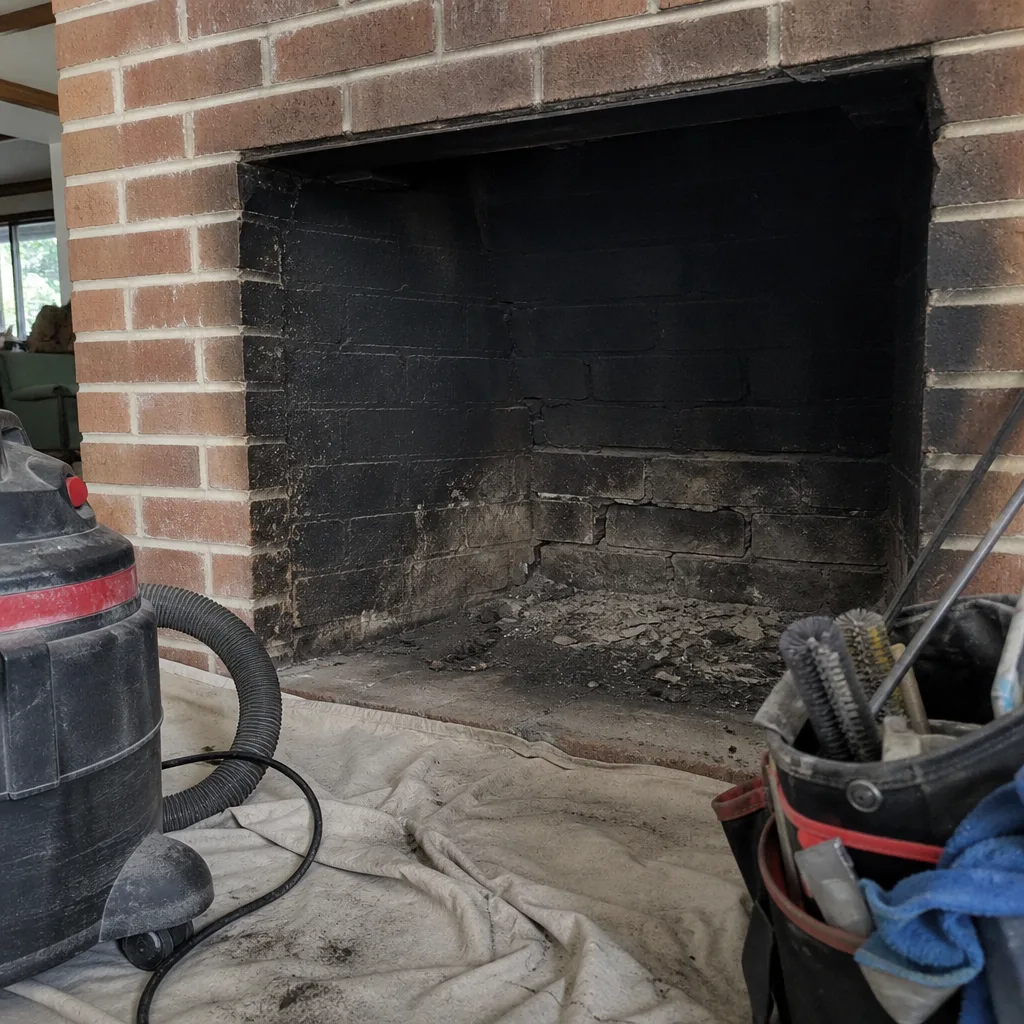
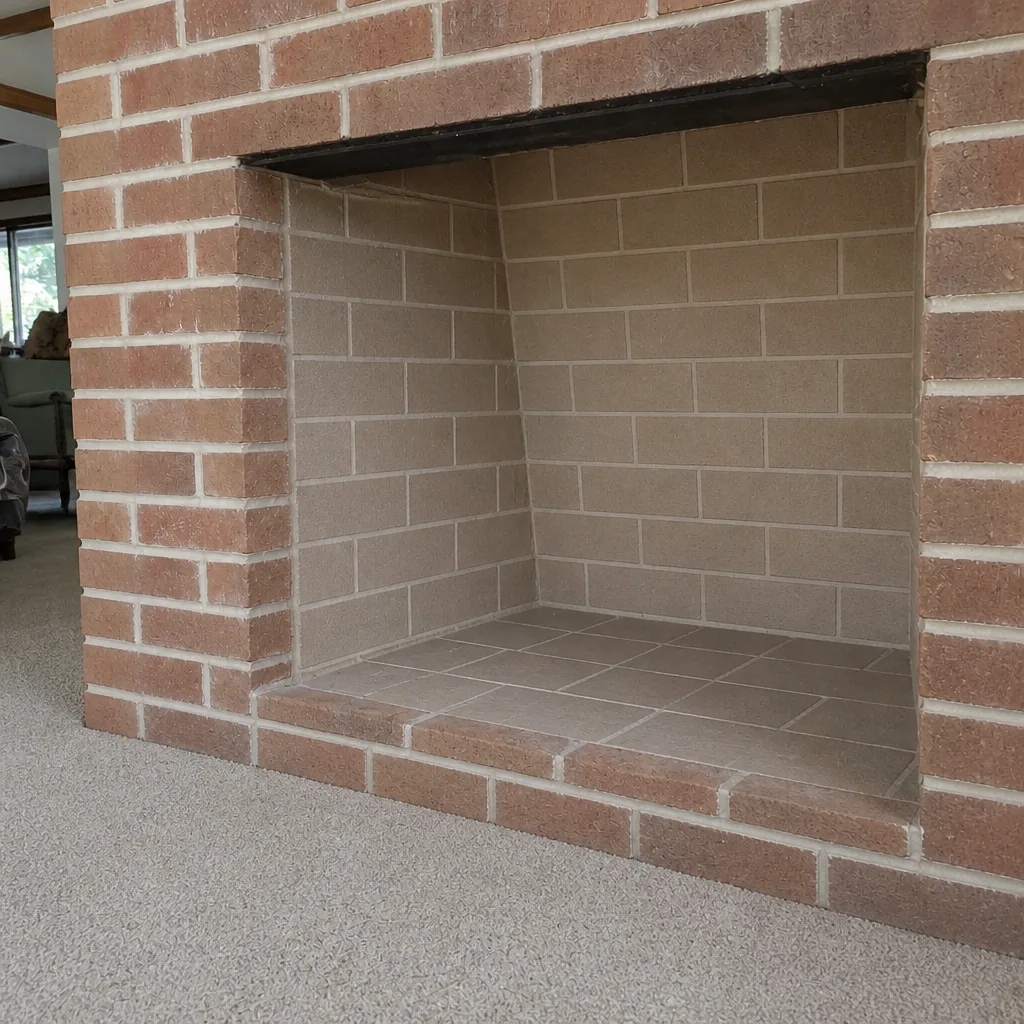
See the difference
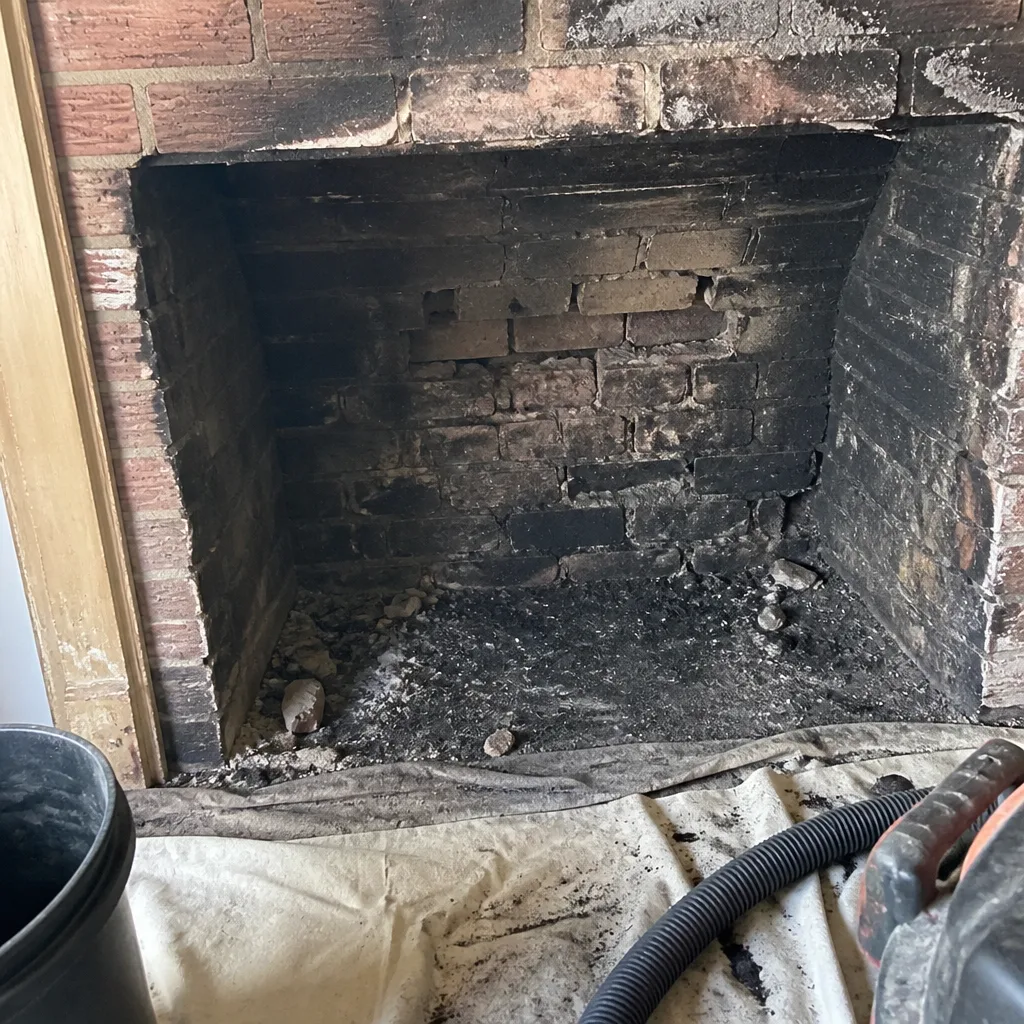 Before
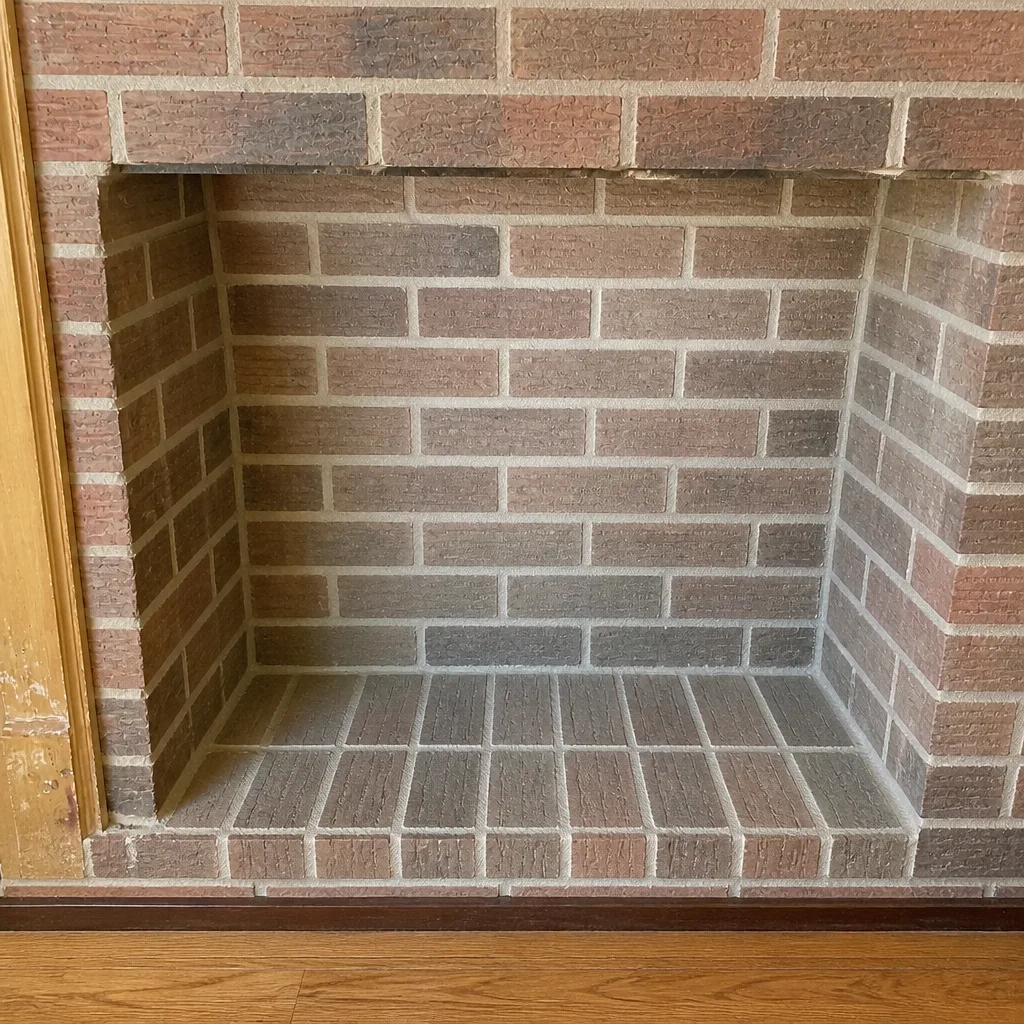 After
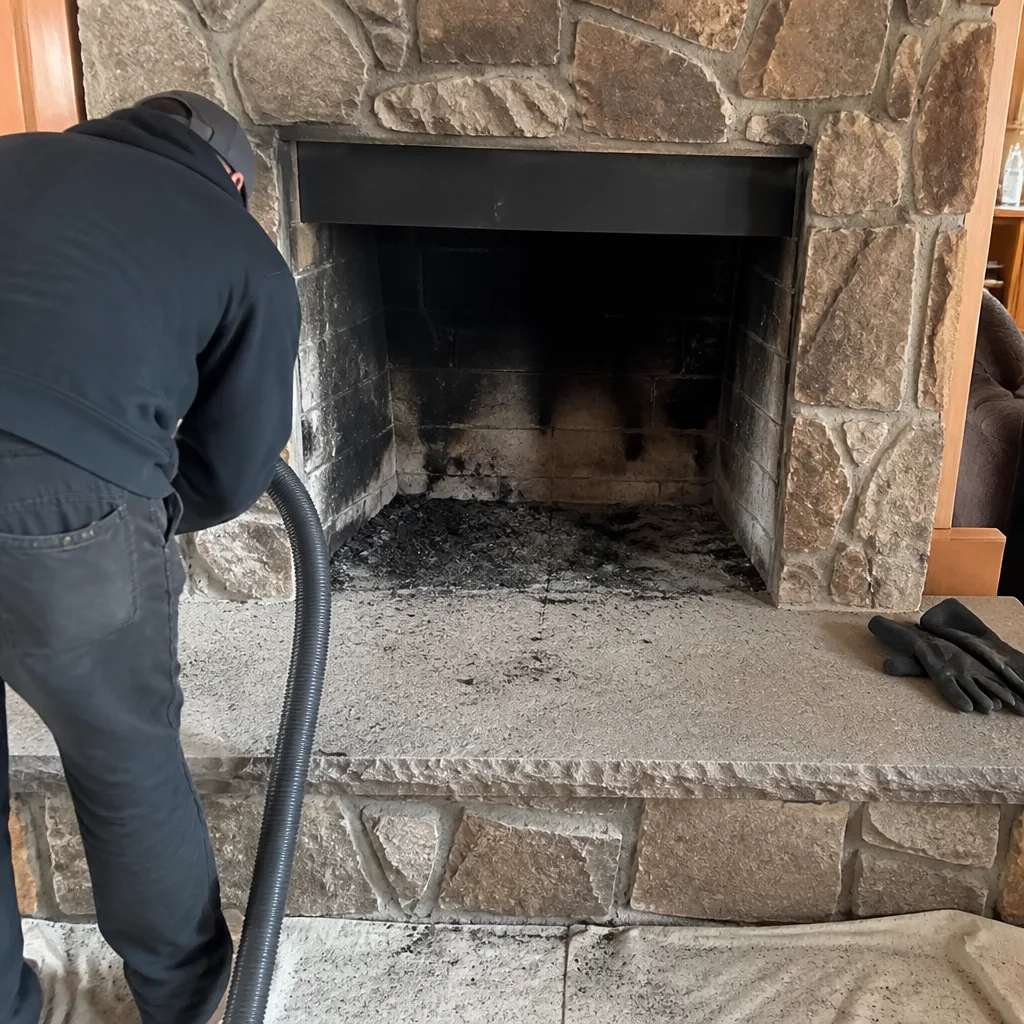 Before
 After
 Before
 After
When to Call a Professional
Some scenarios always call for a professional visit. If you’ve burned an entire season since the last sweep, that’s one. If you’ve had any chimney fire – however small – that’s another; a camera pass assesses the damage the fire left behind. If you’ve noticed a change in draft, smoke rolling into the room on startup, or a stronger smell from the firebox than you used to get, those are reasons to look rather than guess. If you’ve just moved into a Marysville home and don’t know its service history, book an inspection before you burn. If your cap or crown is visibly damaged from the ground, or you’ve had water intrusion near the chimney, those are structural issues, not cleaning issues. And if you’ve never had a professional inspection on record and you have a fireplace you use regularly, that’s the visit to schedule. Chimney Sweep Marysville offers free estimates in Marysville – call (877) 792-7047. We answer 24/7; fast dispatch from 7am to 7pm, Sunday through Friday.
Frequently Asked Questions
You can handle two tasks safely: emptying the firebox between burns and doing a ground-level exterior visual check of your cap and crown. You can also perform a mid-season visual check inside the flue if a professional sweep has confirmed the flue is clean within the past year. Beyond those, a DIY sweep is not the right call – the light-brush pass leaves glazed creosote in place, doesn’t reveal liner cracks, and creates a false sense of a cleaned chimney. For a full cleaning with inspection, book a professional visit. Call (877) 792-7047 for an exact quote – estimates are free.
There are a few reliable indicators: a full season of burning since the last sweep, a strong creosote smell from the firebox, soot falling into the firebox, or reduced draft. What you cannot reliably judge is the interior condition by looking from the fireplace opening. A camera inspection is the only way to see whether the flue is actually clean or whether glazed deposits are building above the smoke shelf. When you’re not sure, that’s the reason to book an inspection, not to guess. Call (877) 792-7047 for an exact quote – estimates are free.
Firebox ash removal and exterior ground-level checks are safe. Interior DIY brushing is where the risk starts, and it’s not because homeowners are unskilled with a brush – it’s that the brush can’t see. If the flue has a cracked liner, a displaced tile, or Stage 2 glazed creosote, a homeowner who brushes past it will believe the chimney is clean when it isn’t. That false confidence is the danger. For anything interior beyond a visual check on a recently inspected flue, use a professional. Call (877) 792-7047 for an exact quote – estimates are free.
Once a year is the standard for a household that burns regularly, and it’s the practical minimum in Marysville’s climate, where damp wood often carries more moisture than the homeowner expects and accelerates creosote accumulation. Heavy burners – the ones who heat primarily with wood through the winter – may need sweeps more than once a year depending on what the inspection shows. If you’ve skipped a season, don’t attempt to make it up with a DIY brush pass; book an inspection instead. Call (877) 792-7047 for an exact quote – estimates are free.
A sweep is a cleaning; an inspection is a diagnostic evaluation of the whole chimney system – flue liner, firebox, cap, crown, and appliance connections. A professional visit typically includes both, with camera inspection before and after cleaning. Many homeowners come to us thinking they’ve had an inspection when what they had was a sweep. Ask specifically for the inspection findings with photos, in writing. If you’re unsure what you’ve had done, call us and we’ll help you figure out the right next step. Call (877) 792-7047 for an exact quote – estimates are free.
A homeowner sweep does not automatically void coverage, but insurance adjusters investigating a chimney fire will look for a professional inspection record. A documented inspection – with photos and findings – carries much more weight in a claims conversation than a homeowner’s recollection of their own cleaning. Keeping professional inspection records with your home files is the simplest protection available. If you’ve never had a professional inspection on record, that’s worth scheduling before the season starts. Call (877) 792-7047 for an exact quote – estimates are free.
The Bottom Line
The DIY chimney cleaning question has a sharper answer than most homeowners expect. Firebox ash and exterior ground checks are yours. Anything interior beyond a visual check following a recent professional pass belongs to a technician with a camera, rotary tooling, and HEPA containment. The reason isn’t that homeowners are incompetent with a brush. It’s that the brush doesn’t see – and everything that actually protects a Marysville home from a chimney fire happens in what you see, not what you brush. Keep the schedule, keep the records, and skip the false confidence.
Ready for a professional inspection?
We work with professional-trade brands – Olympia Chimney, Famco, DuraFlex – because they’re specified by contractors who care about what happens five seasons after the install. Our technicians have up to 10 years of experience reading flues, and the technician who inspects is the same specialist who performs any repair found during that visit. If you’re ready to know what’s happening inside your flue, or you’d simply like a clean sweep report before burning season, call (877) 792-7047 for a free estimate. We answer 24/7. Fast dispatch from 7am to 7pm, Sunday through Friday.
Written by the team at Chimney Sweep Marysville.